
Missouri Booking Photos and Busted Records
A booking photo comes from the arresting agency. The arrest report documents custody and the charge. Who holds that first record depends on who made the arrest: a county sheriff, a city police department, or the Missouri State Highway Patrol. There is no single statewide booking-photo roster in Missouri. Local offices pick their own approach. Some post photos on a web roster, while others release images only through a records request or keep a search page limited to text. State prison records run on a different track. The Missouri Department of Corrections appears online as MODOC, and its name search covers people under active state supervision. No public photo field shows there. A county booking photo, a MODOC supervision profile, and a court case each answer a different question. Match the source to the stage of custody.
A booking photo documents one step: the arrest itself. The rest of a case lives in later court paperwork.
Missouri Mugshot Law and Open Records
Missouri's Sunshine Law keeps arrest records largely open. Under RSMo § 610.100, an arrest report documents the arrest, the detention or confinement, and the charge. That openness does not force every image in an agency system onto a public website. Investigative reports may stay closed while a case is active. After 30 days without a charge, an arrest report can close, subject to the statute's exceptions. Juvenile records sit outside this scheme with their own safeguards under Missouri law.
A second law aims at photo publishers. RSMo § 407.1150 forbids a publisher from asking the photographed person to pay for removal or correction of covered criminal-record information. A knowing, willful violation is a class A misdemeanor, and civil remedies can follow. The section does not order publishers to post photos. Nor does it set one universal free-removal deadline after a dismissal. A private copy never changes the official court result.
The statute arrived in 2014. House Bill 1665 and House Bill 1335 carried it. The operative text took effect August 28, 2014. Early drafts floated broader free-removal terms, but drafts are not current law. No published Missouri appellate opinion squarely construes the section so far. For the controlling rule, read the Revisor's current statute text.
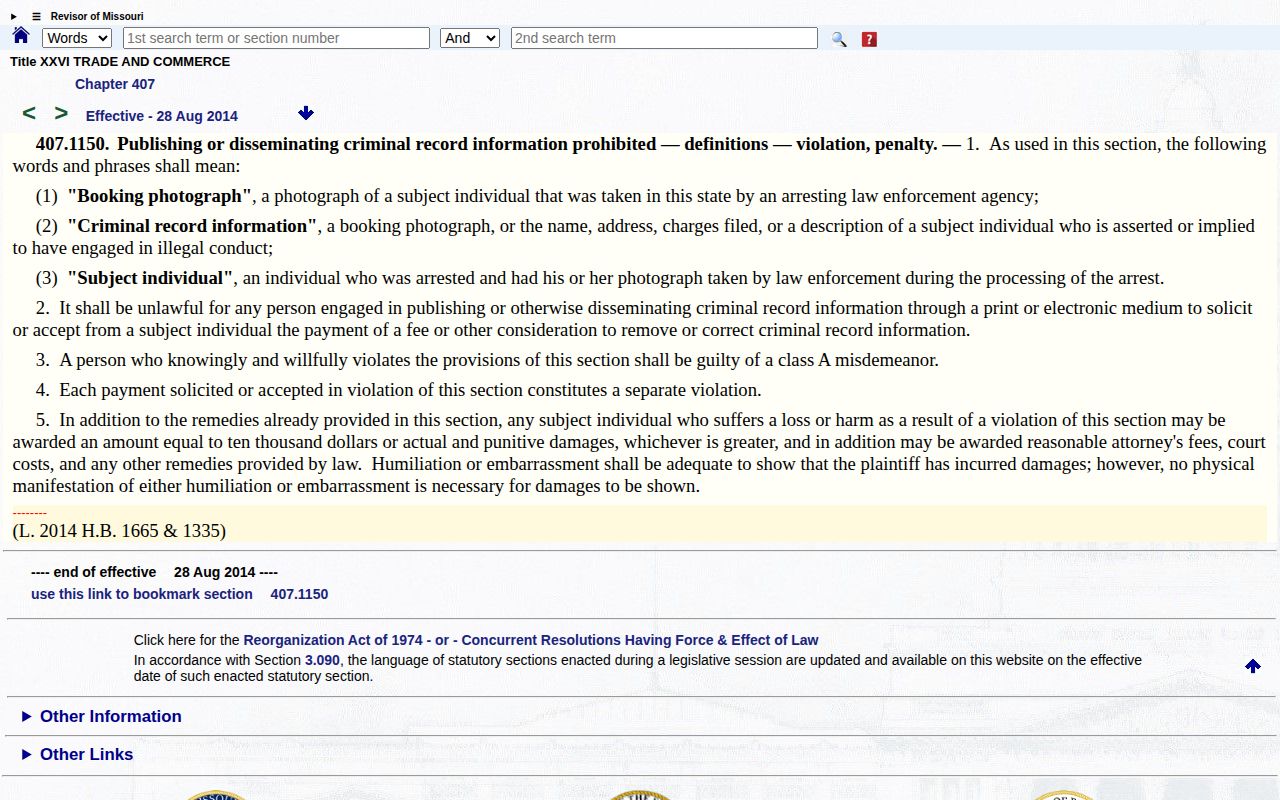
The law is narrow. It bans payment demands without making every arrest image public or setting an automatic update deadline after a court outcome.
What a Missouri Booking Record Shows
Start with the arrest report. It can hold the charge and the confinement details. Section 407.1150 defines criminal-record information to include a booking photograph, identifying information, charges, and a description of alleged conduct. Web rosters vary widely. When an online card skips a field, ask the arresting agency for its booking sheet and arrest report.
- Person and event
- Name and identifying details, arrest date, booking number, and the report documenting detention or confinement, if the agency records those fields.
- Booking image
- A photograph made during intake. The arresting agency holds the record; a public roster may leave it out.
- Charge and alleged conduct
- The offense recorded at booking and the agency's description. Both describe an charge.
- Custody details
- A local system may show bond, booking time, and current or released status, but formats differ across Missouri agencies.
- Disposition
- A dismissal, plea, acquittal, or judgment if the arresting office maintains it. Confirm the final result in the court record.
- MODOC search layer
- The public form accepts first and last name, includes aliases, and requires a captcha. It covers active supervision; the reviewed workflow has no public photo field or confirmed complete set of returned profile fields.
Christian County posts an official inmate list. Benton County runs a current and released roster. Both are live interfaces, but their fields set no statewide standard, so ask the record custodian for a booking sheet when a roster displays less.
How to Request a Missouri Booking Photo
Send it to the agency holding the record. Keep the request narrow. RSMo § 610.023 sets the clock. A custodian should respond as soon as possible and no later than the end of the third business day, unless more time is reasonably needed. Any delay requires an explanation. A written denial triggers another duty: if the requester asks why, the custodian must state the legal basis within three business days. Fees fall under § 610.026. Copy charges can include up to ten cents per standard-size paper page, plus allowed costs for electronic, audio, or visual records. An estimate or advance payment may be requested, so verify current fee rules with the statute and the records custodian.
- Identify the arresting police or sheriff's office and the approximate date. If the person moved between systems, ask which agency holds the booking sheet and image.
- Ask for the arrest report and booking photo by name, date, agency, and booking number if known. Ask for the final disposition only if that office keeps it.
- Request electronic copies where available, and ask for an estimate before work begins. If a part is withheld, ask the custodian to cite the law that permits withholding.
- Reply to a fee estimate or a request for clarification. The law allows some open requests to be closed after a period without payment or needed clarification.
- For a state corrections record, use MODOC's Sunshine Law request route or named custodian. For a county arrest record, start with the correct local sheriff or police records office.
MODOC's Sunshine file can reach current and former supervision or inmate records dating back to 1974. Those state-held records need a separate request path:
- Email the listed Sunshine request office at OD.SunshineRequest@doc.mo.gov; use the department's public-information contacts if staff direct the request elsewhere.
- Give the exact name and spelling, DOC number if known, relevant dates, and whether the question concerns supervision, a booking-related file, or a photo record.
- Describe the record and copy format sought, then ask the custodian to identify any fee estimate or access limit before processing.
MODOC posts no universal fee or photo turnaround. Costs can vary by request. Do not assume the paper-copy cap covers an electronic image, or that an internal photo record is publicly releasable.
Missouri Retention, Sealing, and Expungement
Missouri sheriffs follow a retention schedule written by the Secretary of State. Series SHF 006 covers arrest records. The minimum holding period is five years. Logs, files, registers, fingerprints, and booking sheets all sit in that series. Photos and biometrics normally go to the Highway Patrol Central Repository. A copy kept at the sheriff's office may be reference only. The jail activity log and inmate file carry five-year minimums too. An inmate file counts from release. These are retention rules, plain and simple. They do not promise a photo stays online for five years. The old mugshot archives page lays out the schedules and the historical search route.
Closing and expungement work differently. Section 610.105 closes some favorable dispositions. Separate court processes can expunge eligible arrests or convictions. The petition route under § 610.140 has offense exclusions and waiting periods. Generally it is three years for eligible felonies. It is one year for eligible misdemeanors, municipal offenses, or infractions. An arrest-only petition can begin after 18 months in qualifying cases. The new § 610.141 process, effective August 28, 2026, covers only specified electronic conviction records. It carries a technical deadline in 2027. It is not a blanket clean-slate law.
Closure hides a record from the public, yet the agency keeps it for authorized use. Expungement goes further. It directs custodians to destroy or remove records as the statute requires. But it cannot pull copies already held by private publishers, newsrooms, or search engines. For older custody records, start with the State Archives. Do not assume a live roster still holds them.
- Booking
- The process of recording an arrest and placing the person into a jail's intake system.
- Disposition
- The court's result in a case, such as a dismissal, acquittal, plea, or judgment.
- Sealing
- Closing a record from normal public access while retaining it for authorized use.
- Expungement
- A court-ordered process that requires listed custodians to remove or destroy eligible records.
Find Missouri Busted Mugshots Statewide
Begin with the agency and the custody stage. A broad photo search rarely helps. The same person may show up in a city police report, a county jail roster, a court case, or a state corrections search. Those show up at different points along the way. Timing explains some misses. Local policy, a sealed record, or simply the wrong agency explains others. Keep the arrest date and jurisdiction in view as you move through the official sources.
- Confirm where and which agency made the arrest. A city jail and a county detention center can be separate systems in urban areas.
- Open the county or city page and check its official in-custody roster, recent-release page, or dated arrest log. Look for photos only where the local agency provides them.
- If there is no public roster or the person has left custody, request the arrest report and booking image from the arresting agency.
- Use Case.net to check for a public Missouri court case and its disposition. Ask the clerk for the court record if the public portal does not show the full file.
- Use MODOC only for active state supervision. For federal custody, follow the BOP and ICE routes linked from the statewide Most Wanted guide.
The Highway Patrol's HP-71 search is one narrow extra source. It covers only arrests made by that agency. You can search by name, county, troop, city, and date. The patrol labels results preliminary and unofficial. It keeps them online for just five days. Arrests by sheriffs and police departments elsewhere do not appear there. If a result vanishes, fall back on the agency report and the court record. Do not treat the patrol page as the permanent file.
Where Missouri Busted Mugshots Appear
Not every channel covers the same kind of record. Official sources come first. They sit closest to the arrest, the custody stay, or the court event. The county directory routes you to the right local search path. Still, a roster can appear or vanish, and photo policies shift. Check the agency page itself before concluding anything.
| Channel | What it covers | Photo status | Official? |
|---|---|---|---|
| Arresting agency or county sheriff | Local arrest report, booking, and current custody or release entries | Varies by county and record | Yes |
| Missouri State Highway Patrol HP-71 | MSHP arrests by name, county, troop, city, or date, held online for five days | No guaranteed photo | Yes, limited scope |
| Missouri courts Case.net | Public case events and dispositions | Not a booking-photo service | Yes |
| MODOC public offender search | Active state supervision, not a county booking list | No public photo field found | Yes |
| MOVANS | Custody changes, release, bail, transfer, and court-event alerts | Optional if supplied by an agency | Yes |
| BOP and ICE locators | Federal prison custody or immigration detention | BOP has no public photo field | Yes, federal |
| Third-party listing sites | Copied or indexed arrest and booking entries | May be stale or incomplete | No |
Missouri county pages show the range. Christian County and Benton County run official live roster interfaces. Barry County posts a current roster. It adds a 48-hour released page. Jackson County routes users to an inmate portal. But it warns that the portal is not an arrest-record source. Clay County takes another path. Its public detention listing is text-forward, and its media guidance limits mugshot release. Other counties in the files list no public roster at all. A web search is never a full list of Missouri arrests.
Missouri County Rosters and Busted Photos
A roster search works best while someone is still held in the local jail. What you see depends on the agency. Its vendor matters too. Christian County's live list can show a name, booking number, booking time, charges, bond, and a photo. Benton County's roster offers name, date, current and released views, and photos on some results. Treat these as examples, not a statewide template. A photo can be absent even when the booking record exists.
| Search field or view | How it helps | What it does not prove |
|---|---|---|
| Name | Find a person in the local result set. Check spelling and aliases. | It may return a different person with a similar name. |
| Booking number | Open or identify a particular booking when the agency provides it. | It is not the court case number. |
| Date or time | Separate a recent booking from older entries and account for posting delays. | It is not a statewide publication window. |
| Current or released tab | Show whether a local system retains recently released entries. | A missing release entry does not erase the arrest report. |
| Charges, bond, and photo | Show details the county's public system chooses to display. | A charge is not a conviction; a photo is not a verdict. |
Work a roster in order. Pick the county or city of the arrest. Run the name search. Compare the date and booking number. Then check whether the page has a released tab. If nothing comes back, allow for a short posting lag and try the arresting agency's report or records unit. The public website often has a shorter window than the agency's retention schedule.
Why can a county jail roster miss a city arrest? Some cities run separate municipal systems. A person may not reach a county detention center until transfer. Jackson County, Kansas City, and Independence each run distinct pathways. The right place to look is the arresting agency or the jail that held the person, never a broad assumption that one county list catches every city arrest.
Which Missouri Rosters Show Busted Photos?
Photo rules differ from one custodian to the next. Christian County's roster displays busted photos right in its public interface. Benton County does the same through its current and released inmate views. Clay County takes the opposite path. Its public detention listing is mostly text, and media guidance there limits when a mugshot gets released. Barry County's current and recent-release rosters offer one more local model worth a look. These are policy choices, not a fixed statewide pattern.
Many Missouri counties post no booking image at all. A photo may still sit in the arrest file. You can request it from the agency, subject to the record's status and any closure rule. An online photo gap does not mean nobody was booked.
Recent Missouri Busted Arrest Feeds
Missouri has no one live feed for every arrest. County sources run the full range. Some post current inmate searches or short release pages. Others publish weekly arrest reports, dated blotters, or nothing on the web at all. A few local systems rely on a vendor portal. In some towns the sheriff or local news is where an arrest report appears. Always check the date range on whatever page you open. A weekly summary is not a live jail roster.
The HP-71 search covers just five days of patrol arrests, one narrow statewide window. County sites may add 24-hour or 48-hour release tabs, but those reflect local posting choices. Weekends and holidays can shift what appears. A staffer or system posts on a set cycle. No statewide posting hour exists, and nobody publishes a statewide count of annual bookings.
The MSHP arrest-search interface shows why this source is a feed rather than a roster. It narrows by agency-specific fields and returns preliminary arrest reports inside a short window.
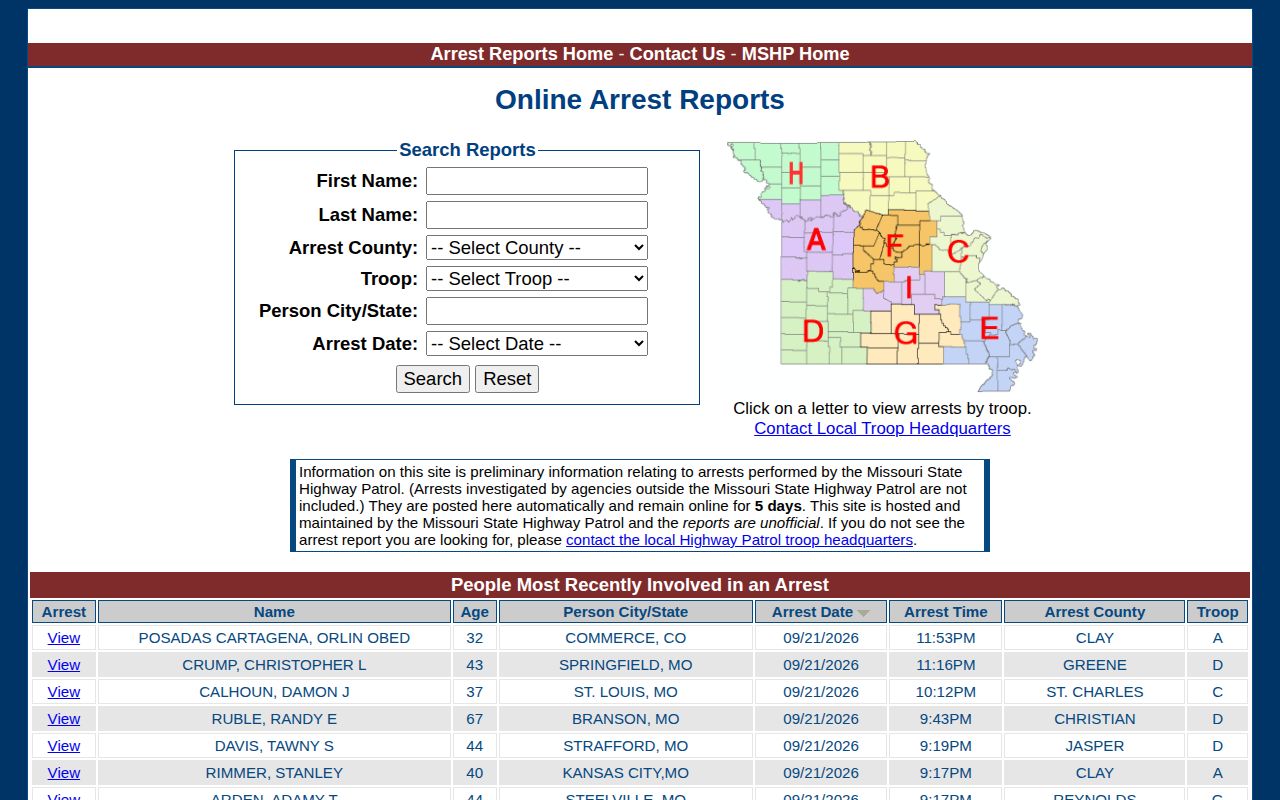
Missed the five-day patrol window? Ask the agency that handled the arrest for its report and booking record. Older county feeds live elsewhere. A clerk, a sheriff, or a local archive may hold what today's roster dropped, and a dated report can still help locate a case. The court record gives the final result.
MOVANS Alerts for Missouri Bookings
MOVANS is the Missouri Victim Automated Notification System. Think of it as an alert service. It tracks custody and court changes, not booking photos. An agency may include an optional photo with a notice, but that option does not cover every person or event. Alerts can flag a court date, a custody change, bail, release, or transfer. Treat each alert as notice of one event. Then confirm the details with the agency or court that holds the record.
A May 2026 notice from the Missouri Department of Public Safety described a system transition. Some local jail users may need to register again. That notice covers alerts, not roster scope. MobilePatrol and Missouri Sheriff Connect sit outside the state system named in that transition.
The official MOVANS search and subscription interface keeps offender search, protection-order search, and alert management separate, and it can send release notices. It is no guaranteed current-arrest-photo tool.
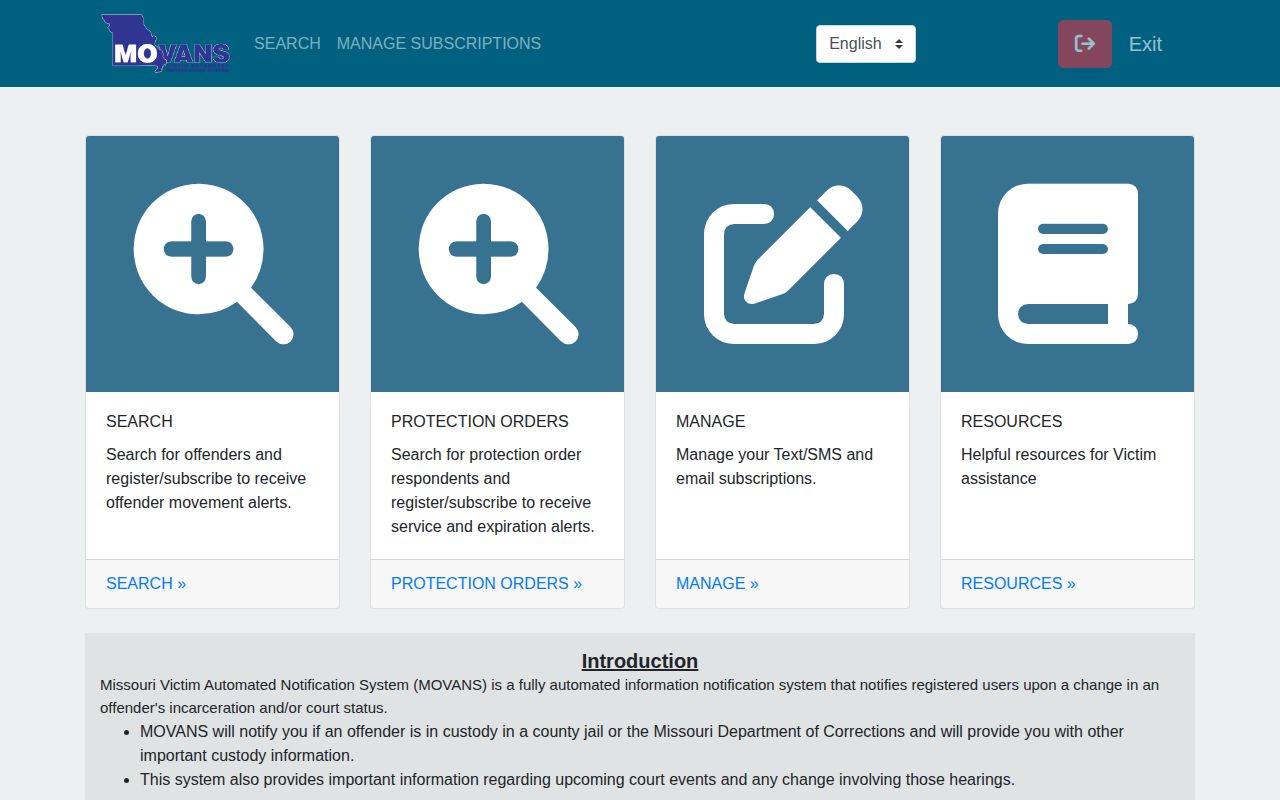
A MOVANS alert covers one selected custody or case event. Confirm any detail with the agency that created the record.
MODOC Search and Missouri Busted Mugshots
The MODOC public offender search tracks active state supervision. That includes people on probation or parole. Discharged offenders are left out. You enter a first and last name, aliases are allowed, and a captcha guards the results. The page warns that safety, security, or confidentiality can limit what it shows. No booking-photo field or photo link appears there.
That gap matters. MODOC's glossary defines the Offender Image Management System as the department's storehouse for offender photos and identity details. A restricted LENS system can display images of actively supervised people to authorized law enforcement. Internal access is not public access. A state prisoner and a county arrestee sit in different lookup systems.
The official offender-search landing page states plainly that results cover active supervision only, with discharged people excluded. It is a supervision lookup, not a mugshot gallery.
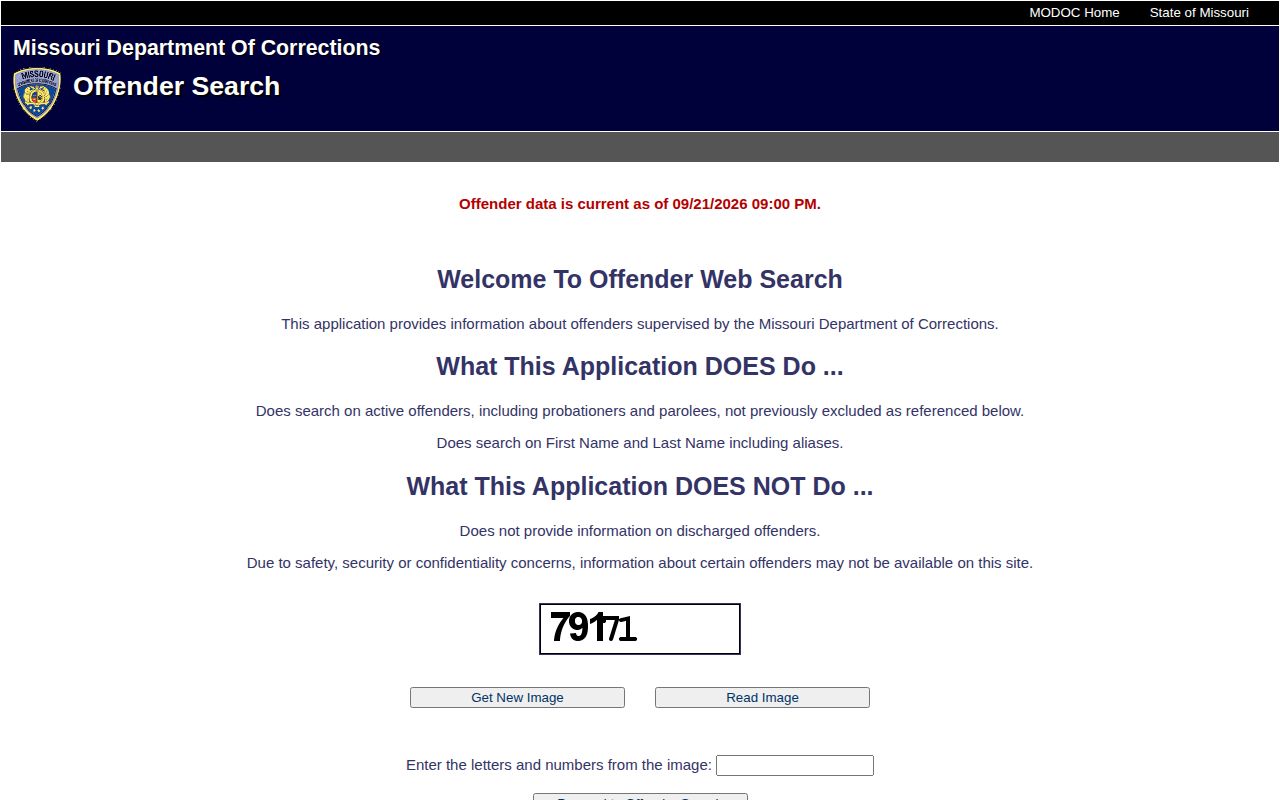
The form checks supervision status. It is not a booking-photo history for everyone who has passed through a Missouri jail. The department's official glossary names the image system and related photo terms. An entry proves records exist. It does not mean searches show them.
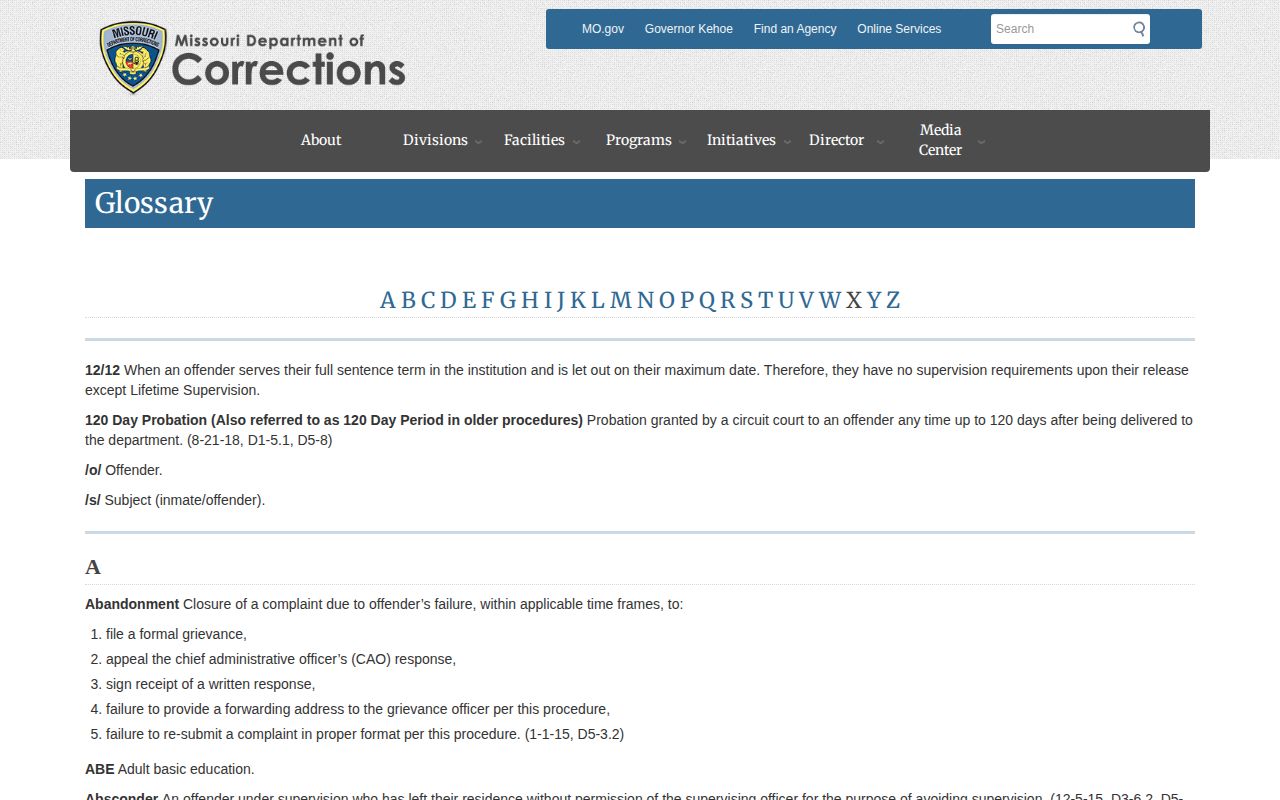
The glossary's terms cover how images are handled inside the agency's own systems. They don't promise a public profile photograph. MODOC's LENS service stays closed to anyone outside authorized law enforcement. Sunshine requests take a separate agency path. Neither route creates a public photo search. A dedicated MODOC guide spells out those access boundaries.
Photo requests belong with the responsible records custodian, who can say what may be released. For DOC-specific photo and record questions, ask the named MODOC custodian which office holds the record, since the public search covers state supervision rather than county bookings.
Missouri Warrant Checks and Wanted Lists
Missouri's State Highway Patrol and the U.S. Marshals Service post selected wanted-person profiles. These lists are live public-safety notices. It's not a list of every open warrant. MODOC's probation and parole command center works with agencies on supervision violations and absconders. MODOC publishes no statewide absconder photo roster. Listings shift as warrants get served or cases change, so trust the issuing agency's own page and tip line.
Wondering about a specific warrant? First find the court or county that issued it. Then ask the circuit clerk or the law-enforcement agency holding the case. Case.net can surface public case activity. It is not a complete warrant database, though, and a name match alone proves nothing about identity. Never approach or try to detain a listed person. Bring the concern to a lawyer or the court so it gets resolved safely, and see the Most Wanted section for verification steps.
Busted, Released, or Sentenced: Where the Record Lives
A record changes hands as a case moves forward. The arresting agency still holds the original booking event. Release can come before a court case ends, and a sentence can move a person into state or federal custody. Match the agency, date, and record type. That keeps distinct stages from blurring into one continuous jail entry.
| Stage | Best source | Photo or record limit |
|---|---|---|
| Just arrested or booked | Arresting police or sheriff, then local jail roster if public | Photo display and posting time vary by agency. |
| In county custody | County detention search or records unit | A roster may omit images or close older entries. |
| Released from jail | Arrest report, booking sheet, and court case | The person may leave the roster while the record remains with the agency. |
| Under Missouri supervision | MODOC public offender search | Active supervision only; no public photo field was identified. |
| Federal custody | BOP locator or ICE locator, as applicable | Federal custody systems do not act as local booking-photo rosters. |
Arraignment is an early court hearing on charges. Bond is a court-set condition for release while a case is pending. Neither term means a conviction.
Busted in Missouri: How Counties Post New Bookings
Missouri's 115 county pages fall into four broad patterns. Some counties post a current roster with booking photos. Some list current and recently released people. Photos vary on those sites, and a third group leans on a vendor search or a text-only inmate page. The rest publish no public roster or photo search, leaving a records request as the only route. These patterns describe agency pages, not the jail population, and any local page can change.
Christian, Benton, and Barry run official systems that can show a live or released view. Photos are not guaranteed for every entry. Jackson County's public page points to a vendor portal and warns that it is not a booking-record source. Clay's detention page is text-forward. Many rural counties offer no current official roster. Boundaries matter too. Jackson County, Kansas City, Independence, and St. Louis City each run distinct local systems, while Callaway's county jail serves as the countywide intake point.
Vendors like JailTracker, Public Safety Cloud, and Zuercher power many county portals. The brand name proves nothing. A page can be stale, unreadable, or empty of photos despite the familiar logo. Check the sheriff's own site for the current link, and fall back on the arresting agency if a vendor page fails.
The statewide roll-up splits blotters from rosters. Barry, Benton, Camden, Cape Girardeau, Clark, Clinton, Cooper, Crawford, DeKalb, Henry, Howard, Knox, Lewis, Linn, Maries, Miller, Mississippi, Pettis, Pike, Putnam, Scott, and Warren all publish an arrest report or weekly blotter. Osage goes further with a photo-bearing dated arrest report. A blotter captures one stretch of time. It's not a live list of who's in jail. Treat these posts as snapshots of reported arrests rather than current custody.
Start in the Missouri County Directory. Pick the place of arrest to reach local busted-mugshots information and city routing. Some cities run their own jails. The county page should say where a records request belongs when the city keeps its own police records.
Missouri Court Cases and Dispositions
Missouri keeps its court records in one public portal. Case.net lets anyone search by name, case number, filing date, or hearing date. The docket view is free and fast. It is not the certified file. Confidential, juvenile, sealed, or expunged cases stay out of public view. Ask the circuit clerk for a certified copy when you need the full record.
The word disposed carries more than one meaning. A dismissal, an acquittal, a nolle prosequi, and a suspended imposition of sentence are all distinct. So are a plea and a judgment. Read the case type, the charge, the judgment, and any later action together. Only then draw conclusions. A booking entry with no Case.net match has several possible explanations. Charges may not be filed yet. The case may sit in municipal or federal court. Access may be restricted, or the data may lag. The clerk and the arresting agency can tell you which.
Juvenile records face their own walls. A public adult roster never gives permission to identify a juvenile. Sometimes the law itself is the reason a case is missing.
Does a missing Case.net result mean no arrest happened? No. Case.net is a court view with coverage and access limits. A restriction is not a glitch. The arresting agency can confirm whether it holds an arrest report. The clerk can say whether a case is public or restricted.
Federal Custody and Missouri Arrests
Federal custody does not show up on a county roster. The Bureau of Prisons locator lists federal prisoners from 1982 to the present. It is searchable by name or register number. There is no public booking-photo field. ICE runs its own detention locator. That one covers immigration holds, not local arrests. The Most Wanted section gathers these federal routes together with U.S. Marshals profiles for Eastern and Western Missouri. One person can span several systems at once. A federal case, a prison term, immigration detention, and a Missouri county booking are different things. Each may sit with a different agency. Someone missing from one locator may be held by another authority. He or she may be on supervised release or simply out of custody.
Third-Party Missouri Busted Listings
Private publishers copy and index public arrest data, but they hold no custodian role in Missouri. Their state pages can cover different counties, pull from a different time window, and lag behind the agency's own record. Start with the official source. Use these sites only to learn which record or which agency to ask about.
The RecentlyBooked Missouri page offers county navigation with a recent-arrest framing. Coverage shifts county by county. Its policy says corrections and removals for eligible entries are free. Mugshots.com runs a Missouri state index and calls its record-maintenance process free. Neither counts as an official roster.
The Arrests.org Missouri search lets you browse by county, name, date, or arrest entry, and it posts no clear state-specific removal outcome or deadline. Busted Newspaper's Missouri section and other local branded pages vary with the sources they can pull. Its documentation form is simply an unofficial publisher request path. Mugshots.zone's Springfield page is one local subdomain. It is not a verified statewide index. A local form may ask for paperwork, but paperwork does not make a publisher official.
The Missouri county-navigation screen shows a private directory. No sheriff's statewide roster stands behind it. The page can still point you toward a local path, though the county agency remains the authority on its own records.
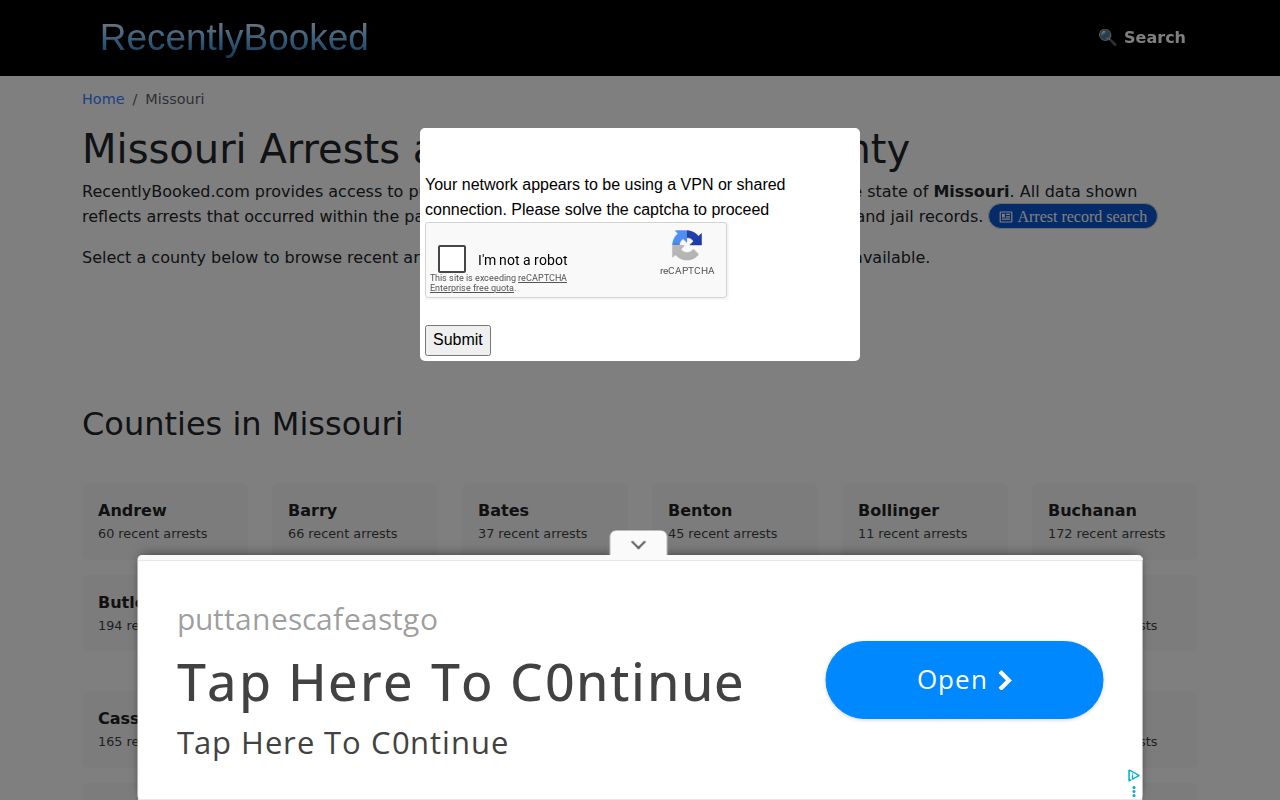
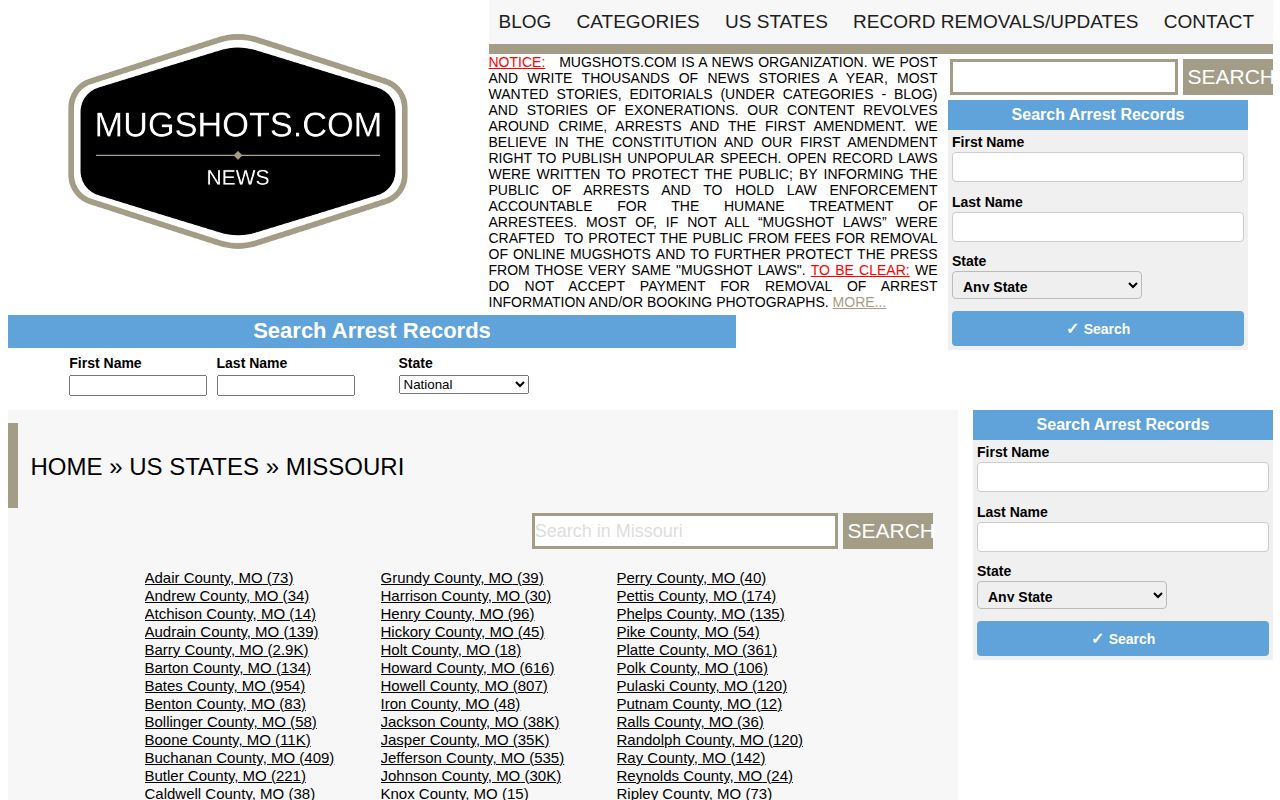
This screen belongs to a private publisher. Verify names, dates, and outcomes elsewhere. The official agency and court hold the real record. The Mugshots.com state page describes itself as a record and news index, and its notice says no payment is accepted for removal or correction. That stance is the publisher's word, not proof that an old copy is accurate.
An index entry is a lead, not a source record. It may trail behind the current case status. The Springfield Mugshots.zone page shows a local publisher disclosure. It also offers an opt-out panel. That documents one local site's interface, not a verified statewide Missouri search.
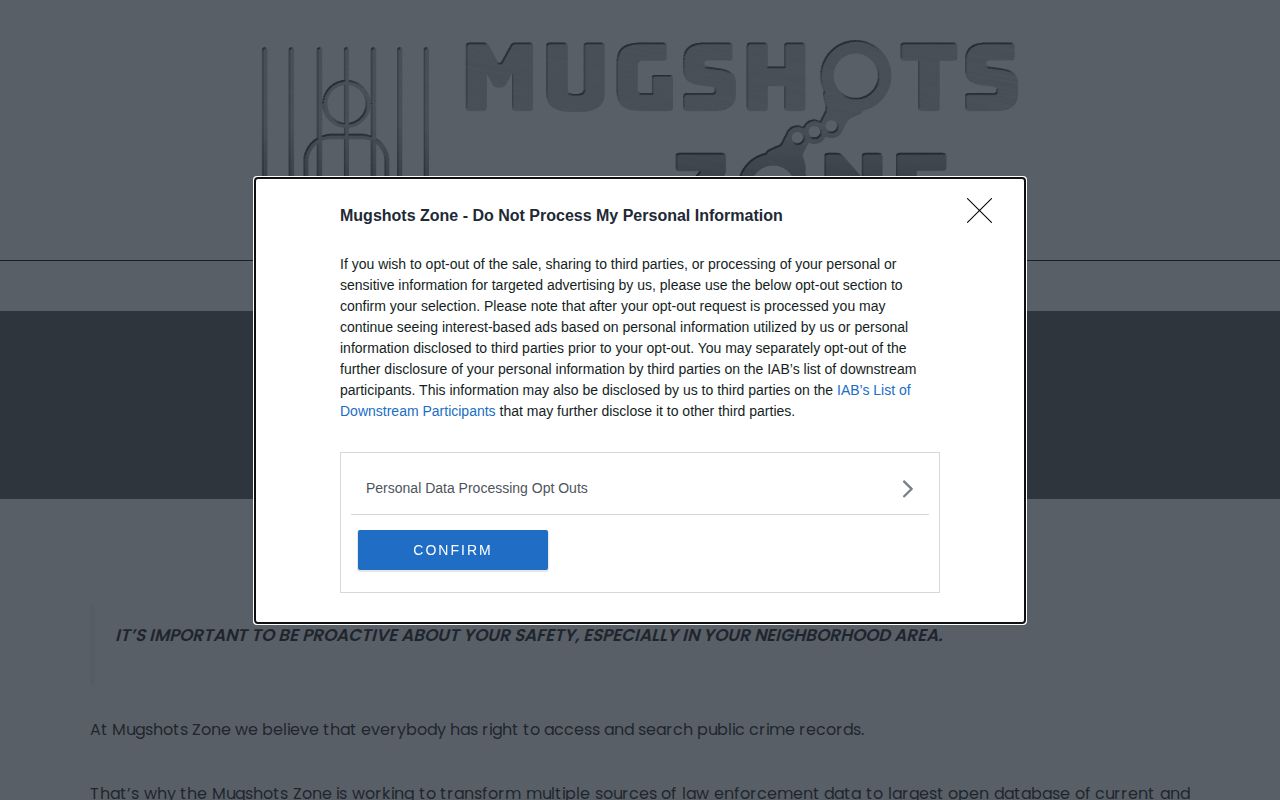
One subdomain does not make a statewide index. Mugshots.zone's reach across Missouri is not established by it. Missouri newsrooms, meanwhile, take their own approach to booking photos. KSHB generally skips routine booking photos. It makes exceptions for public safety or unusually newsworthy cases. The Kansas City Star stopped most booking photos, with limited exceptions. The St. Louis Post-Dispatch ended its monthly mugshot galleries. KCUR covers the policy debate and regional crime news. A newsroom may update a story after a disposition, but no general removal promise applies.
Send a correction with the official court result and keep the source URL. Never pay anyone who conditions removal on money for covered Missouri criminal-record information. Section 407.1150 targets those demands made to the subject. It does not promise every private copy vanishes. Use the publisher's free documented route first. Ask a search engine to refresh a stale result only after the source itself changes.
Choose the Missouri County That Booked
Missouri counts 114 counties plus one more entry: the independent City of St. Louis. That makes 115 separate localities where a booking can land. The county seat tells you geography, not which agency actually made the arrest. Search the place where the person was taken into custody. Bigger cities complicate things. Someone might sit first in a municipal jail. They then move to a county facility. Some never show up on the county roster at all, because the city keeps its own custody record.
The local pages flag whether a public roster or dated blotter exists. They point to the agency's own source or its records-request path. All 115 locality sites have their own routing. The alphabetized county and city directory is the starting point. It leads to the right sheriff. That may be a police department or detention system. Court dispositions, though, live in the court portal.