
Missouri Wanted-Notice Sources
Missouri publicizes fugitives through several official channels. None serves as a daily statewide warrant list. A wanted profile asks the public to help find one person in a named case. An arrest roster, by contrast, shows who a local jail booked or holds. A court docket follows a single case file. Different custodians, different updates. The statewide layers break into three groups: MSHP profiles, MODOC supervision work, and pages from the Eastern and Western U.S. Marshals districts. MODOC publishes no public photo roster of names. Local practice varies from county to county.
| List | Who runs it | Photos? | Where |
|---|---|---|---|
| MSHP wanted profile | Missouri State Highway Patrol | Individual profiles may include a photo. | Official MSHP profile page |
| MODOC absconder information | Probation and Parole | No public named photo roster located. | Official MODOC division page |
| Eastern District profile | U.S. Marshals Service | Profiles may include a photograph when posted. | Official Eastern profile page |
| Western District profile | U.S. Marshals Service | No entry appeared when checked. | Official Western profile page |
| County or city notice | Local agency or court | Varies by locality. | Reach the official locality through the County Directory. |
The MSHP Profile Format
The Missouri State Highway Patrol Most Wanted page shows what one official profile looks like. A single entry can flag a subject as wanted or armed and dangerous. It may list aliases, physical details, alleged charges, and case facts. A tip number or investigating agency usually appears too. Any current photo or warning sits on that page. Leave photographs there rather than copying them elsewhere. MSHP publishes no statewide count, posting schedule, or fixed removal interval. Profiles can outlive a change in case status. So check the live notice before acting. Follow the contact it lists. If the profile names another investigating agency, that agency's instructions control. Read each field in context, since the labels identify the case and the agency's request.
| Profile field | How to read it |
|---|---|
| Wanted designation | An agency's request for help locating a person; check the current page for status. |
| Aliases and description | Identifiers reported by the agency, not proof that a person has been identified. |
| Photo | An image published on the official profile; view it there and do not copy or recirculate it. |
| Alleged charges and case facts | The agency's account of why it seeks help, not a verdict or disposition. |
| Tip number or agency | The official route for information about that specific case. |
To use a wanted profile safely, follow these steps:
- Open the MSHP page and confirm that the profile is still posted by the official agency.
- Read the warning, case description, and contact instructions as written. Do not infer facts that the profile does not state.
- Send information only through the tip number or investigating-agency route shown on that profile. Call 911 if there is an immediate threat.
- Leave any contact with the person to law enforcement. Do not follow, confront, or try to detain anyone.
Note: Use the contact printed on the active MSHP profile. A saved copy may point to a stale route.
MODOC Absconder Records
An absconder here means someone supervision staff are trying to find after a serious violation or a failure to return. The Missouri Department of Corrections Probation and Parole division describes its 24-hour Command Center. That unit tracks people under community supervision and handles serious violations. It issues arrest warrants and develops leads with police. MODOC posts no public named absconder list with photos. A third-party list should not fill that gap. The public search covers active supervision, including probationers and parolees. Discharged offenders are excluded. There is no public photo field. LENS, the Law Enforcement Notification System, serves authorized law-enforcement users only. A blank result settles nothing about a specific supervision question. Use MODOC's official channels instead. The MODOC public search screen itself notes it may omit information for safety, security, or confidentiality reasons.
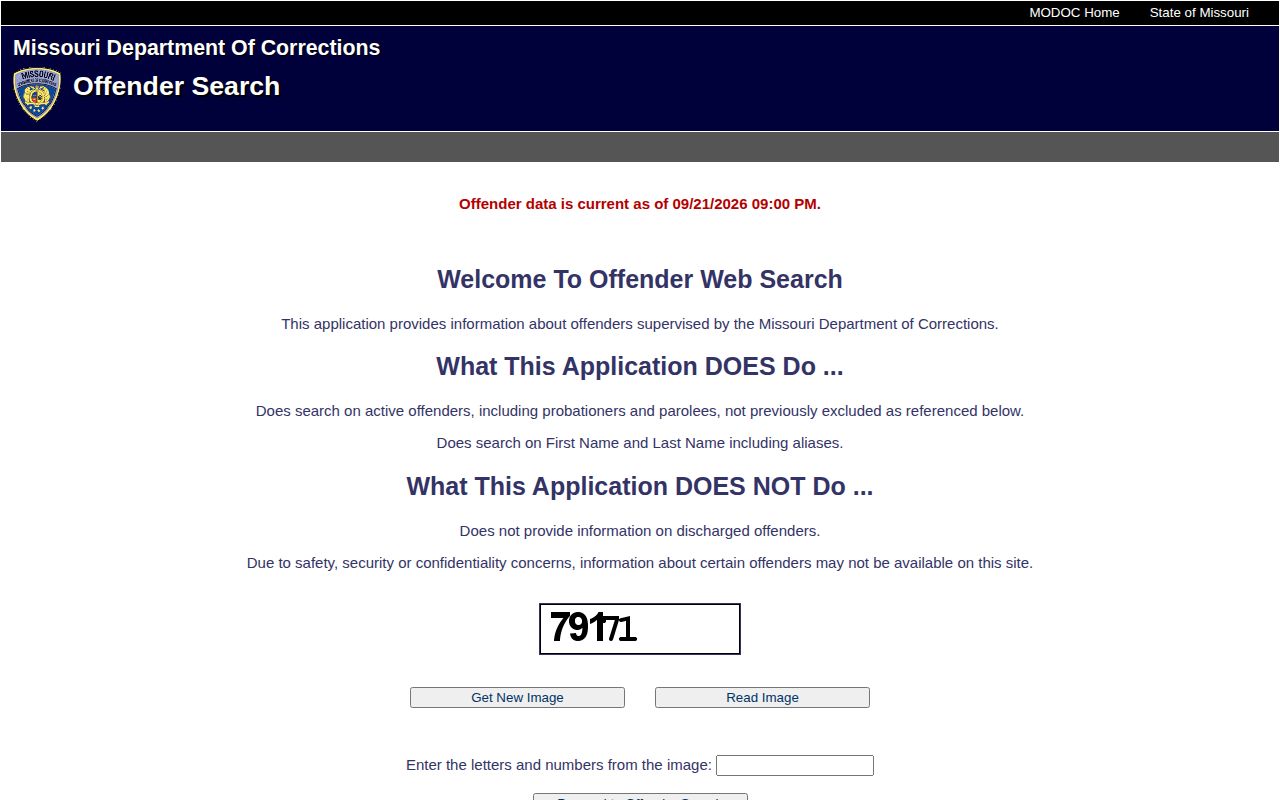
This screen is a supervision search. It is not a named absconder photo roster or a county booking record. A blank result does not show whether a warrant exists elsewhere.
USMS Missouri Fugitive Profiles
The U.S. Marshals Service splits Missouri between two district pages. The Eastern District profiled-fugitives page displays official entries when the district posts them, and district information lists a 24-hour tip line. A federal profile may carry a name, photograph, aliases, federal charges, district, and tip instructions. It is an apprehension notice. The Western District profile page can sit empty between postings. An empty page rules out nothing about federal fugitives or state warrants. Warrant questions go to local agencies. Current district contacts are listed separately. For federal custody rather than an active fugitive notice, the Bureau of Prisons locator searches inmates held from 1982 to the present. It offers name and register-number searches. Booking photos are not part of it. A released or not-in-custody result means only that BOP is not the holder; another authority may be. The BOP inmate locator is a custody search, not a wanted list.
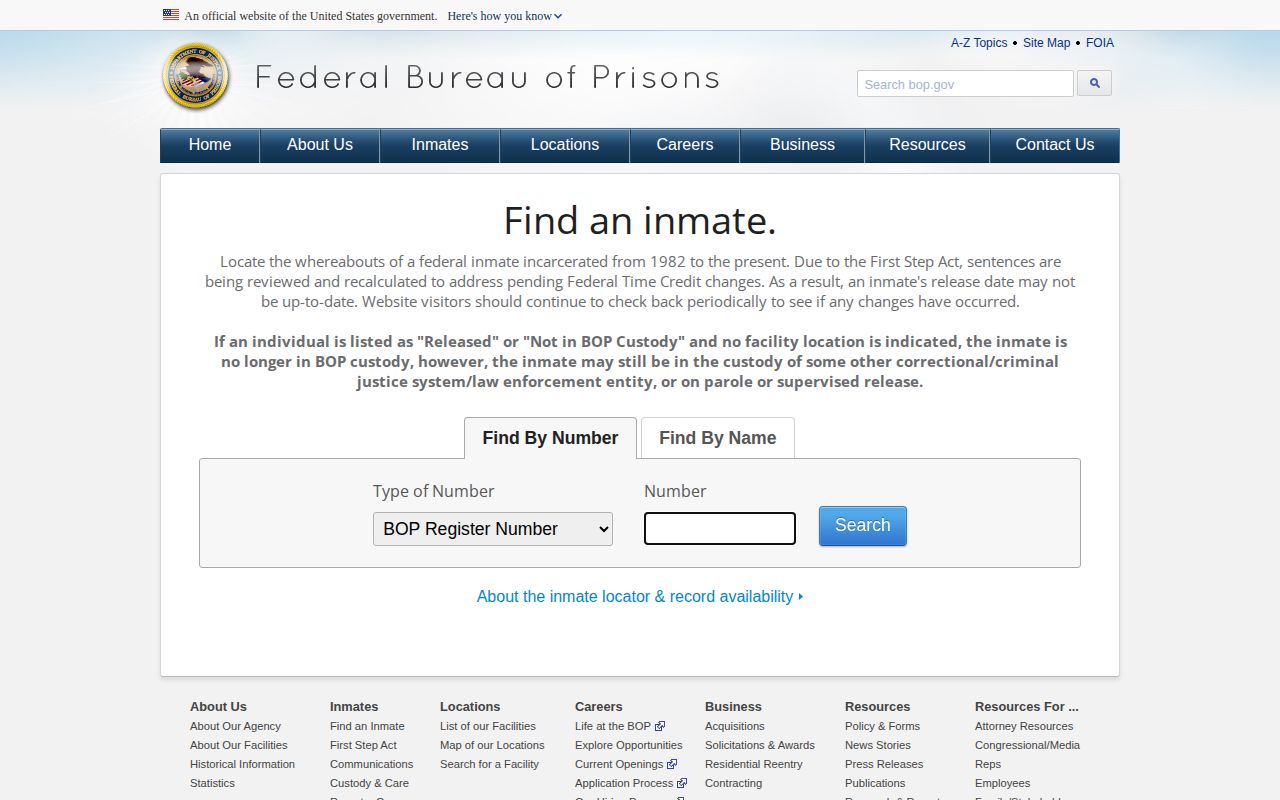
The ICE Online Detainee Locator covers current ICE custody and certain recent releases. It omits people under 18. No public photo field exists. Note: A federal custody result does not show whether another agency holds the person or a Missouri warrant exists.
Missouri Warrant Checks
Think of a wanted profile as a spotlight on one person, not a warrant sweep. Missouri has no single database that gathers every warrant from its counties, cities, courts, and federal districts. So an absent profile means nothing. The only trustworthy answer comes from the agency that issued the warrant.
Start local. Figure out which county or city handles the case. Then open the Missouri County Directory to find that locality's official site. What you can do online varies a lot from place to place. Call the court clerk when a page leaves you guessing. You can also reach out to the law-enforcement office that may hold the record. Ask them to confirm the issuing authority and the warrant's current status.
The State Highway Patrol offers one more tool, and it is narrow. The HP-71 search holds preliminary, unofficial arrest information for MSHP arrests only. It stays online for just five days. Arrests by other agencies never appear there. It is not a warrant database either.
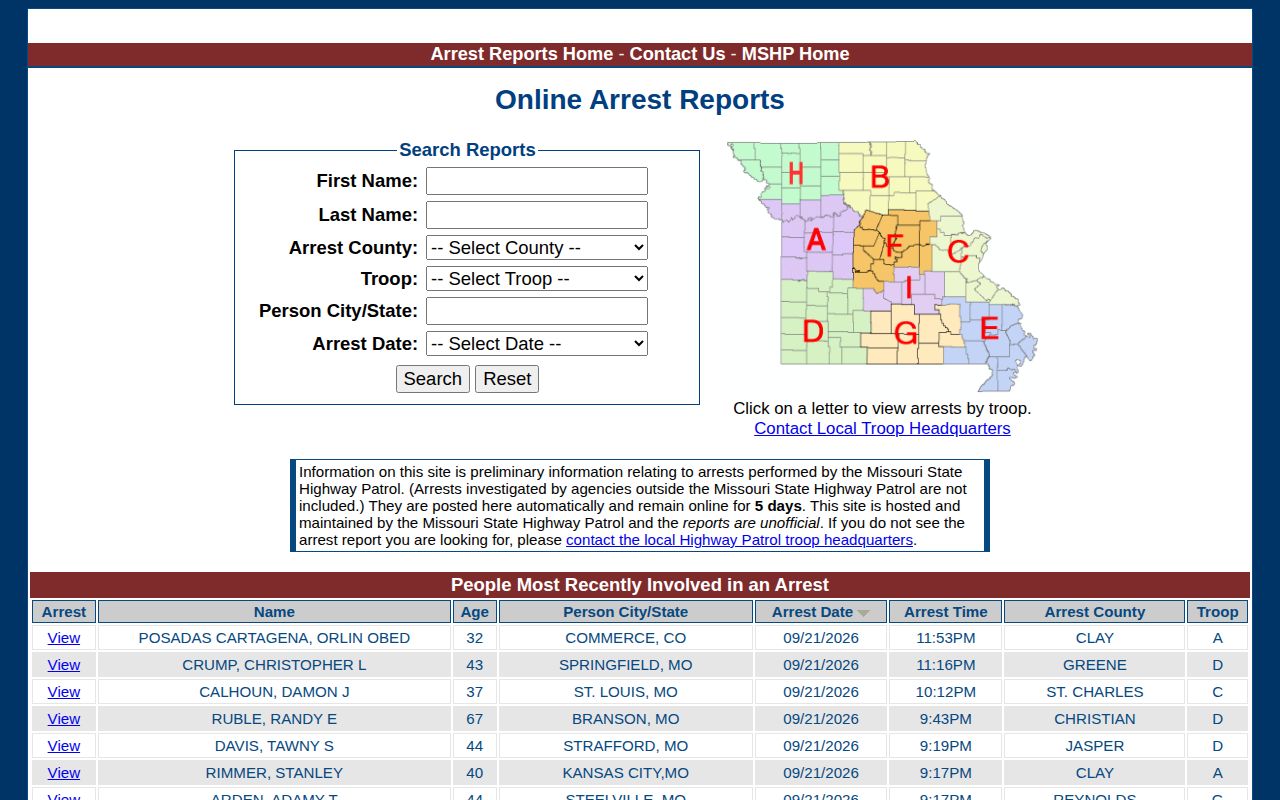
Use this sequence to check an individual case without treating one screen as complete:
- Identify the likely arresting agency or the court that handled the case. If the county is unknown, use available case information to narrow the jurisdiction.
- Search the official court portal by litigant name, filing date, or case number, and note the court and case type.
- Contact the issuing court or responsible law-enforcement agency through its official channel to ask whether it can confirm a current warrant and what process applies.
- If requesting a public record, name the record and custodian. Under RSMo § 610.023, a custodian generally responds as soon as possible and no later than the third business day, unless more time is reasonably needed. Closed or restricted material may not be available to the public.
- If a warrant may apply to you, contact the issuing court or a qualified attorney for safe, lawful next steps. Do not rely on a third-party page or an old search result.
Missouri Court Case Status
Missouri Case.net lets the public search case information. You can search by litigant name, filing date, case number, or hearing date. A disposition is simply the court's outcome. That might be a dismissal, a plea, an acquittal, or a judgment. The portal can point you to the right court and let you track an open case. Still, it is not a certified file. Some documents or cases may never show up there.
Read a docket as a status snapshot. Confirm the court, the case type, the charge, the judgment, and anything filed later. A case marked closed or disposed is not self-explanatory. Juvenile, sealed, and expunged matters can be missing or restricted. When records seem to conflict, ask the clerk and the arresting agency to sort it out.
Once an agency or court confirms a warrant, ask what kind of record it is and what official process governs it. Treat the terms below as questions to verify with the issuing authority, not as a stand-in for its live record.
| Warrant type | What to confirm with the issuer |
|---|---|
| Arrest warrant | An order authorizing an arrest. Confirm the issuing court or agency, case number, current status, and official way to address it. |
| Bench warrant | A court-issued warrant tied to a matter before that court. Confirm the case or hearing, active status, and required court action. |
Want a certified copy or the complete file? Go to the clerk or the courthouse instead of relying on the public portal.
MOVANS Custody Alerts
MOVANS is the Missouri Victim Automated Notification System. It sends alerts tied to custody and court events across the state. A statewide transition notice spells out the alert triggers. Custody changes, release, bail, transfer, and court dates are among them. The service's public guide says a photo can appear when the responsible agency supplies one. That display is optional, though. MOVANS is not a booking-photo feed, a fugitive list, or a statewide warrant search.
The MOVANS interface keeps its functions separate. These cover search, protection orders, subscription management, and resources. Anyone who wants alerts should enroll through the system itself and keep contact details current. A custody alert can help with safety planning and case awareness. It will not show every local arrest, though. Nor can it tell you where a warrant stands today.
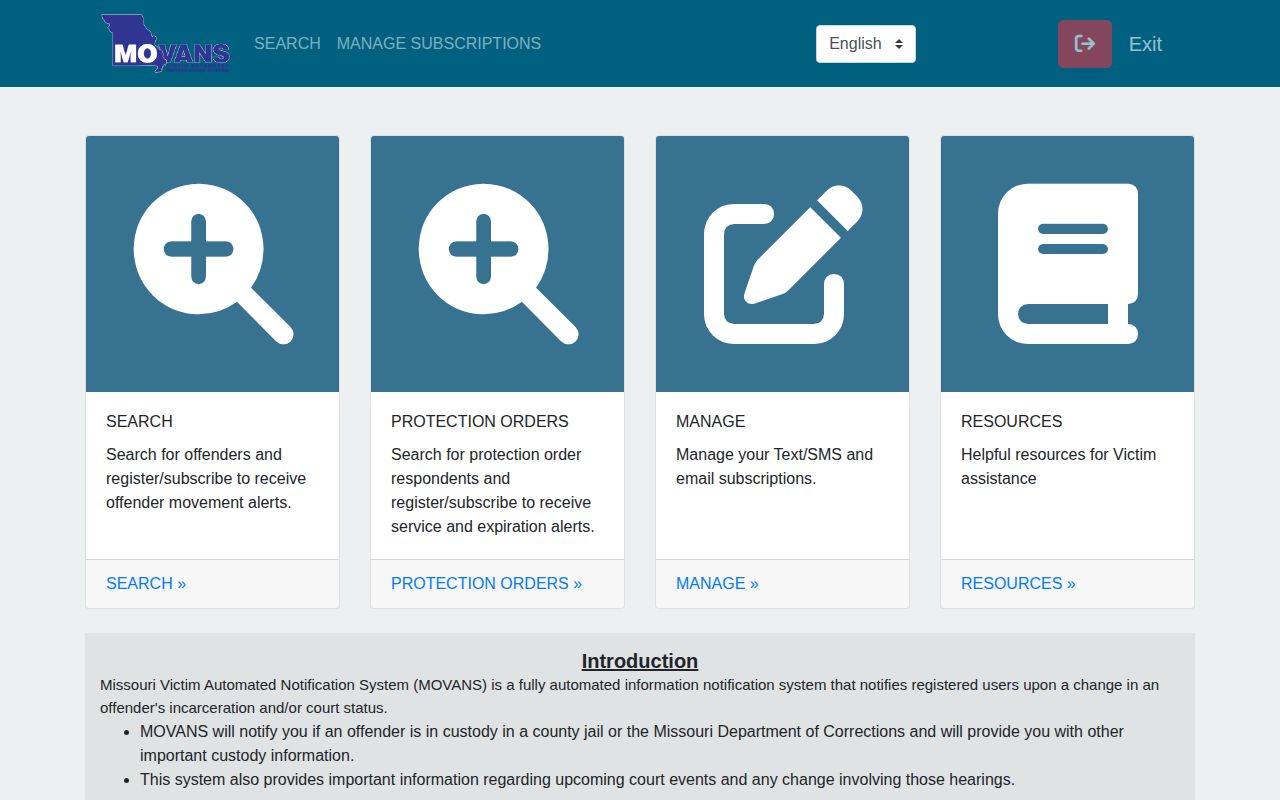
The MOVANS public guide is the authority on mechanics. It explains how the notification service works. Photos depend entirely on the agency supplying them. Treat MOVANS as a possible photo source, never a guaranteed one.
Note: MOVANS reports selected custody or court events, but it does not give a criminal case disposition.
Send a Safe Tip in Missouri
Always follow the current agency instructions. Tip routes differ by case and district, so check the active official notice before you send anything.
Eastern District USMS: 24-hour line, 1-888-869-4589.
Western District USMS: use the official district contact page.
MSHP: use the contact printed on the active profile.
A careful tip gives officials something they can actually assess. Keep it direct, and never put yourself or another person at risk:
- Open the official notice and check its current instructions and the responsible agency.
- Report only what you personally observed, with a time and place if known. Do not add guesses as fact.
- Use the contact on the profile or the official district channel. Follow any instructions about anonymity or follow-up that the agency actually provides.
- Stop there. Do not search for the person, take a photo, follow a vehicle, or post a suspected location online.
Before you repeat a claim, check the current agency notice and the court's own outcome. Details change as a case moves. For recent bookings and official rosters, see the Missouri statewide arrest and booking sources.